Shared Gate Codes:
A Security Risk You Are Ignoring.
One code shared by ten, twenty, or a hundred people — and you have no idea who just came in. Shared access codes are convenient. They are also a serious, structural security vulnerability that most operators choose not to think about.
One Code for Everyone — and Everyone Includes Former Users
The shared access code model is straightforward: generate a 4-digit PIN, distribute it to your users, everyone can enter. Simple. But its security depends on two assumptions that are almost never true: that the code will be changed regularly, and that former users will not retain access after they leave.
In practice, codes are rarely changed — because every change requires reaching every current user simultaneously, which is disruptive and error-prone. Former users — cancelled subscribers, seasonal visitors, ex-employees, ex-tenants, ex-guests — retain the code indefinitely unless a full rotation happens. The result: the set of people who can open your gate grows continuously over time, entirely beyond your control.
- Former subscribers to parking facilities continue entering for free long after cancellation
- Ex-employees, ex-tenants and ex-guests retain access well beyond their authorised period
- Codes circulate through messaging groups and are forwarded to unknown third parties
- Every entry is anonymous — it is impossible to know who actually entered, or when
- Changing the code disrupts all current users and is error-prone to execute at scale
Where Shared Codes Fail: Five Real Scenarios
The shared code vulnerability affects every setting that uses a single access credential for multiple users. Here are five scenarios where the security and financial consequences are very real.
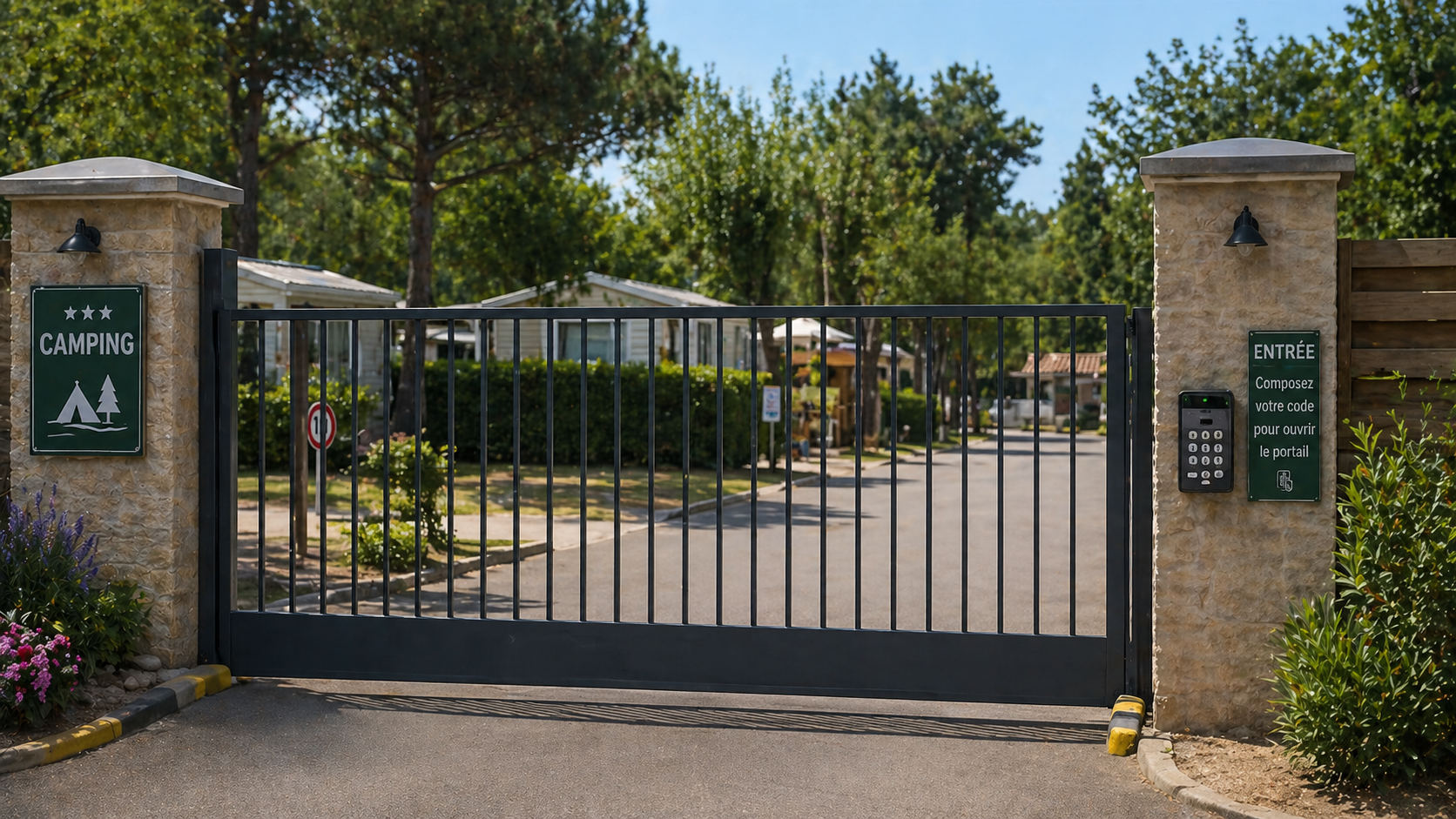
Most campsites use a single code for the main barrier, shared with all current guests for late-night arrival. The code is communicated at check-in — or, increasingly, via the booking platform message thread. By the end of the season, it has been shared in WhatsApp groups, noted on paper, and forwarded to friends. Former campers from previous seasons still have it. The operator has no log of who actually came and went. Changing the code at season start requires redistributing it to every current guest — a logistical exercise most sites simply do not carry out.
SmartGates for Campings →Urban shared parking facilities are among the most affected. A monthly subscriber receives a PIN to open the barrier. When their subscription expires or is cancelled, the code does not change — it cannot, because changing it would require immediate redistribution to every other active subscriber. The result: former subscribers continue using the parking for free, indefinitely. There is no record of individual entries. No way to know who parked, when, or how many times. Operators underestimate the revenue loss because they cannot measure what they cannot see.
SmartGates for Parkings →In many residential buildings, the entry code has not changed in years. Former tenants still know it. Estate agents who visited for viewings years ago still know it. Ex-partners. Tradespeople who came once for a repair job. The code has effectively become known to a small but entirely uncontrolled group of people. Residents feel a false sense of security — the gate still requires entering it — but the set of people who can actually enter is invisible and unmanaged.
Businesses routinely give access codes to suppliers, delivery services, and contractors. When a logistics company changes its driver, the new driver gets the code. When a contractor subcontracts, the subcontractor gets the code. When an employee leaves, they take the code with them. Unlike employee accounts that can be deactivated in an HR system, a 4-digit gate code has no concept of individual identity. There is no revocation — only a full rotation that disrupts every legitimate user.
For holiday rentals and B&Bs, the access code is typically sent via the booking platform pre-arrival message. Guests screenshot it, forward it to companions, occasionally share it in travel groups online. When the stay ends, the code remains valid — unless the host manually changes it before the next guest arrives. Many do not. Former guests can return. And every host knows the sinking feeling of wondering whether the gate is actually closed, and whether the right person is using it.
Why Changing the Code Does Not Solve It
The instinctive response to the shared code problem is to rotate the code more frequently. It sounds logical. In practice, it solves very little — and creates new problems.
- Every code change requires reaching every legitimate user simultaneously — those who miss the notification get locked out
- The transition period creates confusion: some users have the old code, some the new one, and support requests spike
- Frequent rotation is disruptive — most operators who commit to monthly changes revert to annual or never within months
- Even with frequent rotation, every entry remains anonymous — a shared code can never provide an audit trail
The shared code model has a structural flaw that no rotation frequency can fix: it confuses access with identity. The code proves someone has the code — it says nothing about who that person is, whether they are still entitled to enter, or when their access should have expired.
The Right Solution: One Credential per Person
The solution to the shared code problem is not a better code. It is the elimination of shared codes entirely. Each person who needs access should receive their own individual credential, valid only for the period they are entitled to use.
- Each user gets a unique access link — no shared code, no common PIN
- Access expires automatically at the end of the authorised period — no action required
- Any credential can be revoked instantly — no code rotation, no disruption to other users
- Every entry is logged with a timestamp and the individual who triggered it
- No app required — recipients open the gate from any smartphone browser with a simple link
SG Anywhere connects to the dry contact terminals of any existing gate controller or parking barrier — no hardware replacement needed. From the SmartGates app, you issue individual access tokens per user, valid for exactly the dates and times they need. Tokens expire automatically. Every entry is logged. And if you need to revoke access instantly — a cancelled booking, a fired employee, a subscription that just ended — one tap in the app removes it immediately.
Discover SG AnywhereThe Cost of Inaction
For parking operators, the cost of the shared code vulnerability is direct and measurable: former subscribers using the facility for free, month after month, without being counted. For campsites and rental hosts, it is a security exposure that most will never audit — because there is no data to look at. For companies and residential buildings, it is an unknown set of people with permanent, unmonitored access to a controlled space.
Individual access tokens do not just fix the security problem — they give you something the shared code model can never provide: a complete, accurate record of who entered your property, and exactly when. That record is the foundation of real access control.
Ready to Replace Shared Codes?
SmartGates replaces shared access codes with individual time-limited tokens — for campsites, parking facilities, short-term rentals, companies and residential properties.